
The company
Bernhofer combines more than 400 years of tradition with innovation.
Since its founding in 1603, tradition and solid quality craftsmanship have shaped the history of the Bernhofer drop forge. As specialists in the forming and machining of forged parts, we offer our customers comprehensive services and high-quality products. We provide everything related to forged parts—from consulting and development, hot forming, and surface finishing to quality testing and logistics.
Gesenkschmiede Bernhofer is an owner-managed family business rooted in the Innviertel region, with more than 400 years of tradition. Forging has been carried out at the Höhnhart site since the company was founded in 1603.
150
customers
400
Years +
company history
3600000
Forged parts / year
20
countries
12.000
tons
Crude steel demand / year
100
%
green electricity
12000000
kWh
Electricity consumption / year
180
staff
Bernhofer is professional, sustainable, innovative, and down-to-earth.
Vision
Technology leadership as a system supplier.
Our ambitious goal is to become the technology leader as a system supplier for small and medium batch sizes (250-50,000 units per year) for highly complex and innovative forged parts. We see the dynamics of the market as an opportunity and consider planned flexibility with the best quality to be a decisive competitive advantage for us and our customers.
By continuously increasing economic efficiency while protecting our environment and resources as much as possible, we are securing the Bernhofer family business and its immediate surroundings for future generations.
Mission
We give shape to ideas.
Our mission – "We give shape to ideas" – is all about collaboration – with customers, partners, and employees. Bernhofer sees itself as a system supplier for all aspects of forged parts.
We provide most of the services in-house and, together with selected partners, can offer a full range of services related to forged parts. Trustworthiness and partnership-based cooperation are part of our everyday practice.
Bernhofer then & now
Discover the history of the company.
- 1603
- 1807
- 1833
- 1886
- 1949
- 1975
- 1987
- 1996
- 2000
- 2010
- 2011
- 2015
- 2019
-
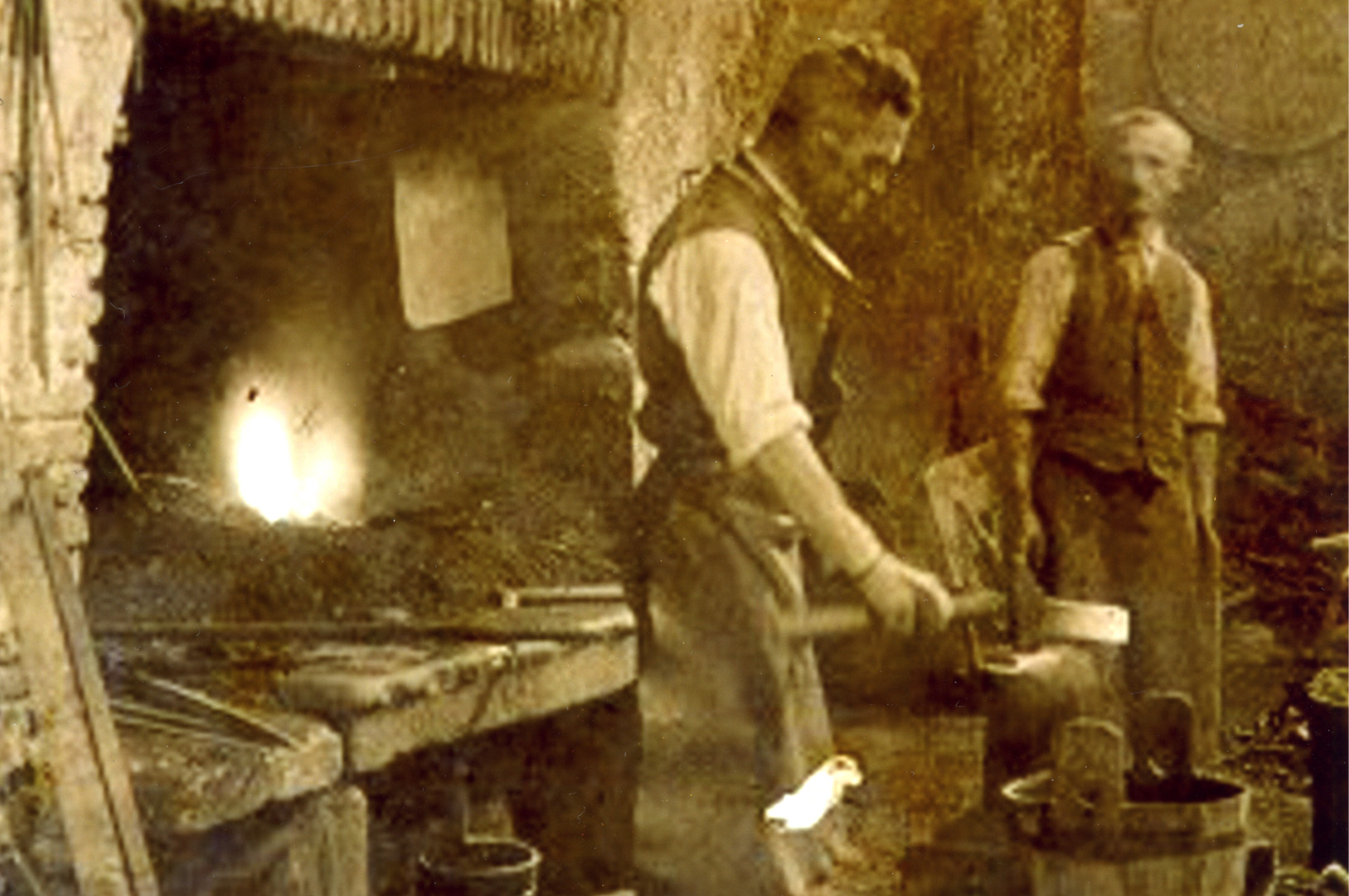
Blacksmithing tradition since 1603
Since 1603, forging has been carried out on the Bernhofer company's land in Höhnhart—from 1672 under the name Pelshofer, before the hammer mill was handed over to a representative of the Feßl family in 1729.
Photo: Hand forging in the Bernhofer hammer mill around 1880.
-
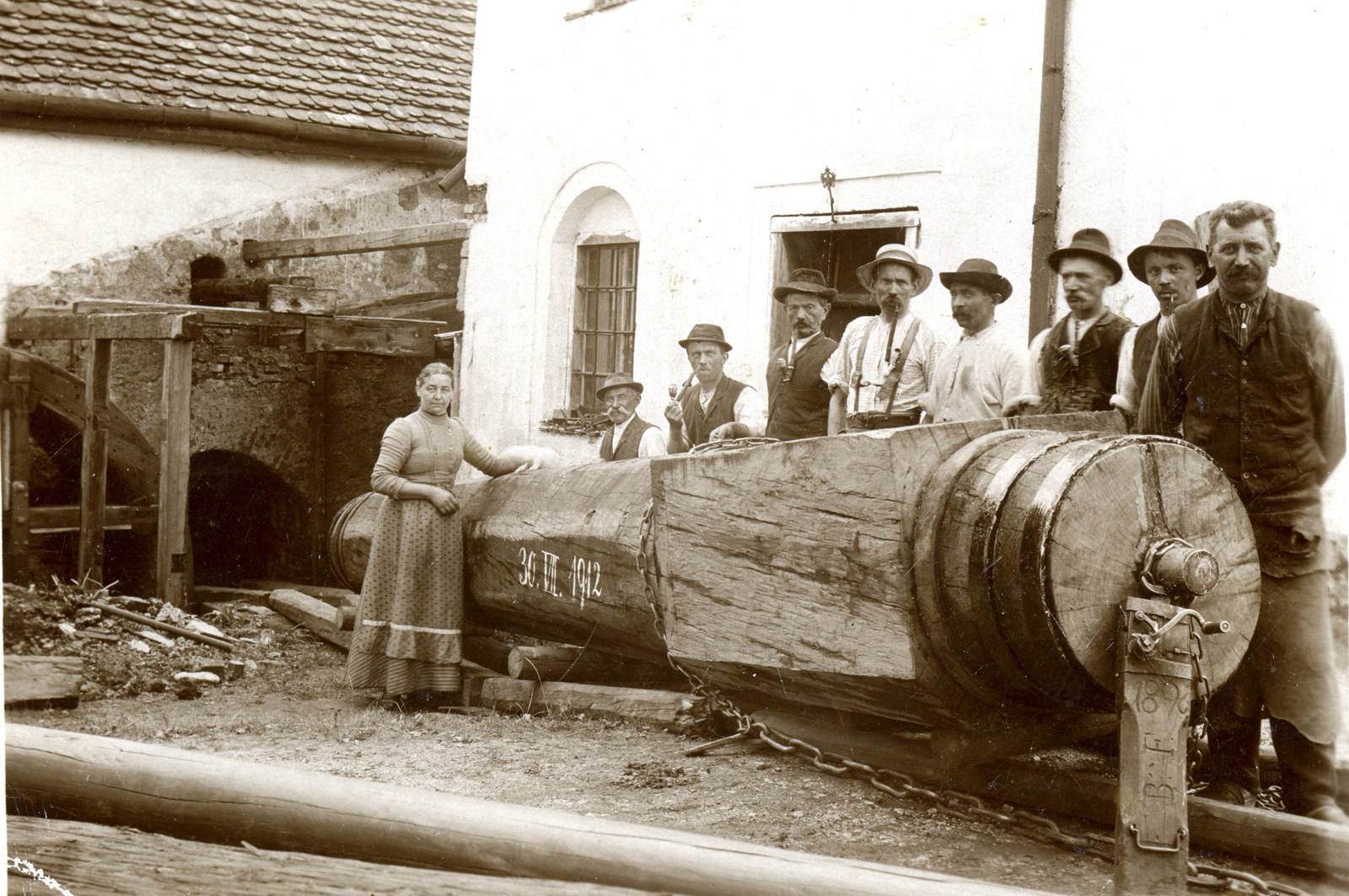
Bernhofer since 1807
Since 1807, the Bernhofer family has continued the blacksmithing tradition in Höhnhart, and continues to do so to this day. Even back then, a wide variety of tools for agriculture and forestry were forged in the water-powered hammer mill.
Photo: Family and employees with a wooden wave, 1912: far left Maria Bernhofer (January 26, 1868 – December 12, 1946), far right Ferdinand Bernhofer (December 13, 1864 – April 6, 1932).
-
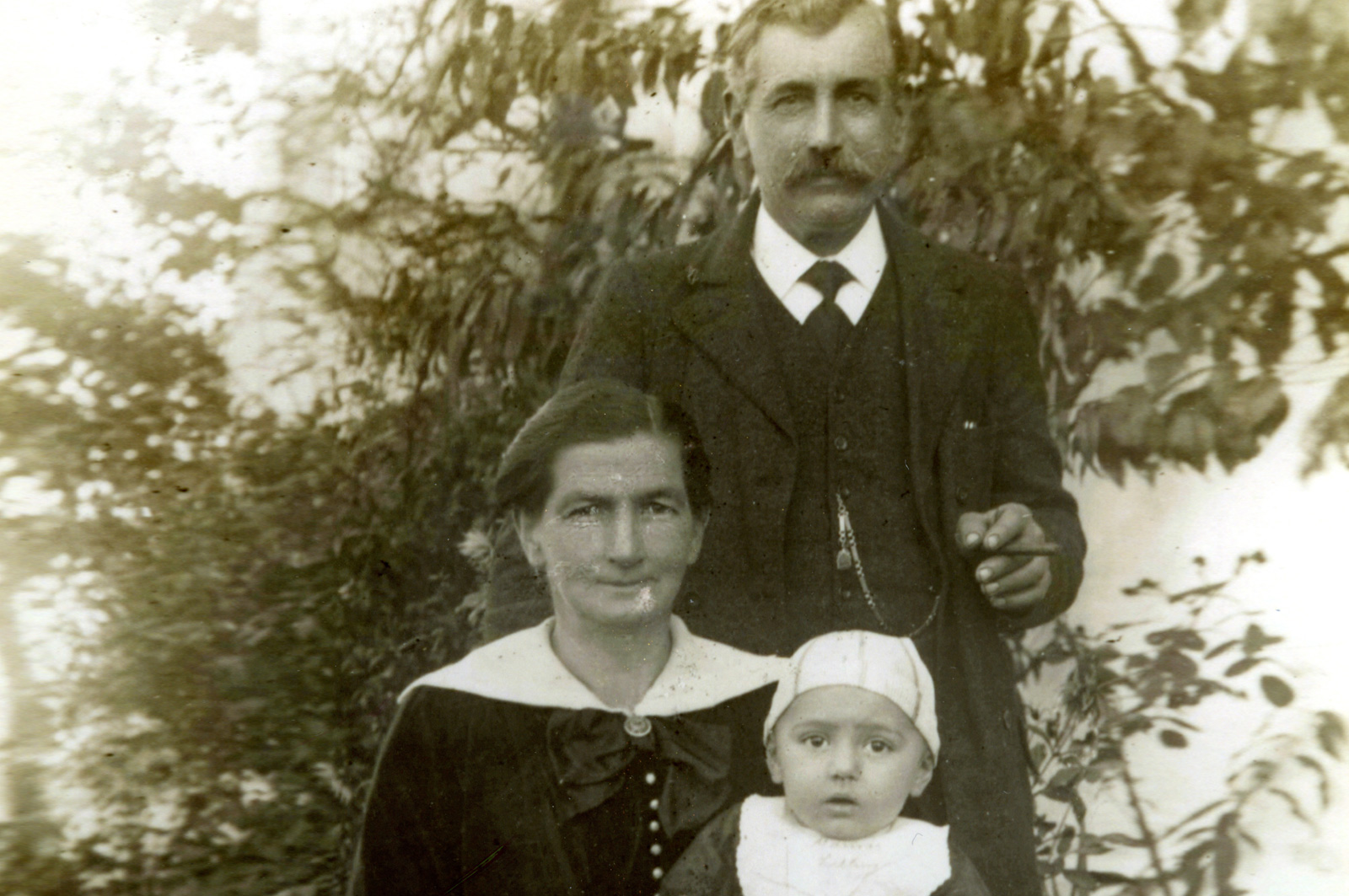
The first of six Ferdinands
In 1833, Georg Bernhofer's son became the first of six Ferdinands to own the estate.
Photo: The Bernhofer family in 1923: Ferdinand (born December 13, 1864, died April 6, 1932), his second wife Maria, née Lengauer (born October 2, 1881, died March 13, 1964), and their son Ferdinand (born November 2, 1922, died February 14, 1975).
-
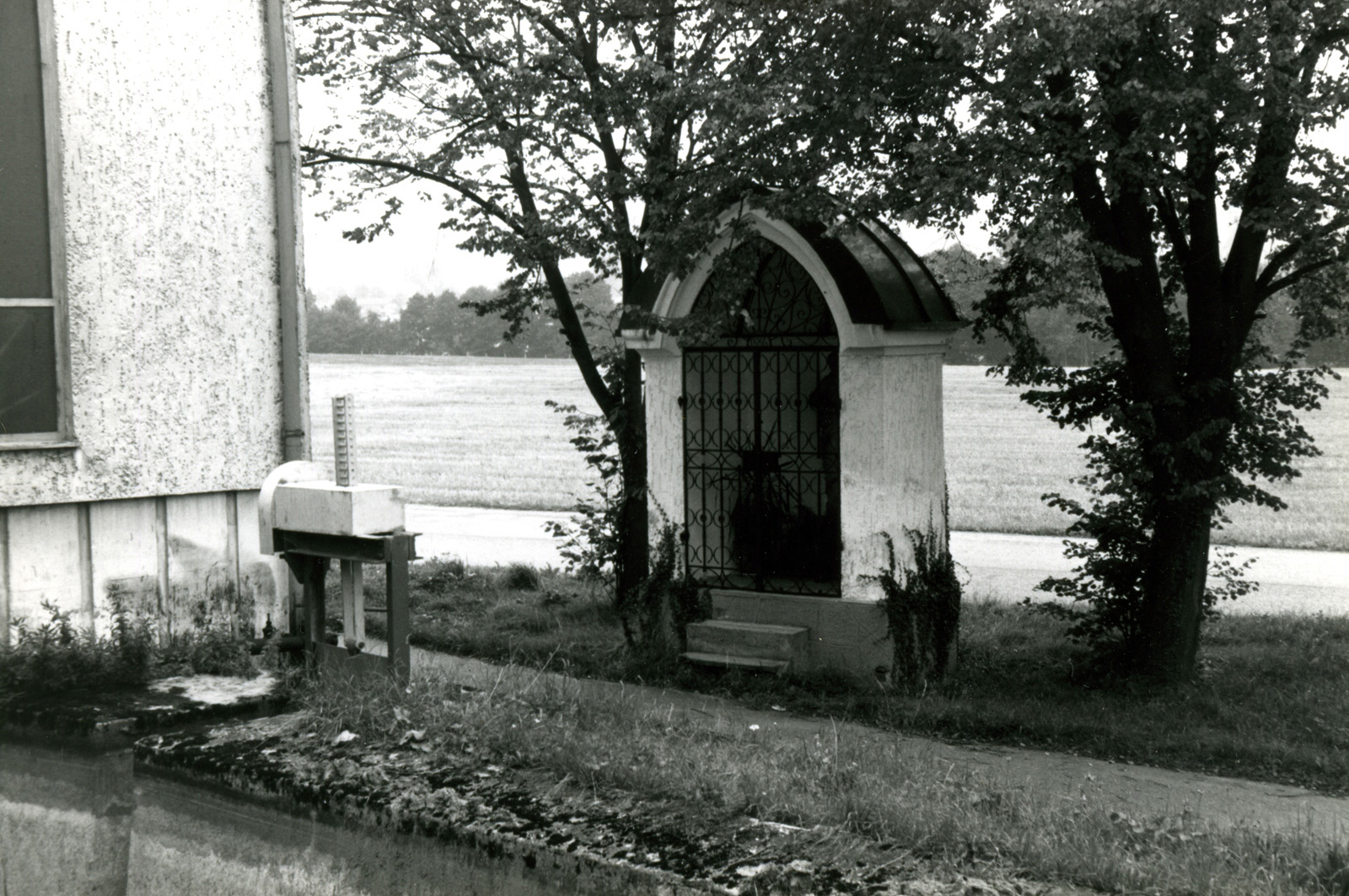
Hammer Smith Chapel
In 1886, Ferdinand II built the Hammerschmied Chapel, also known as the Marienkapelle, and furnished it with statues from the Wildenau Castle collection dating back to 1651.
Business expansion forced the band to relocate twice in the first half of the 2000s.
Photo: Views of the Hammerschied Chapel and St. Mary's Chapel.
-
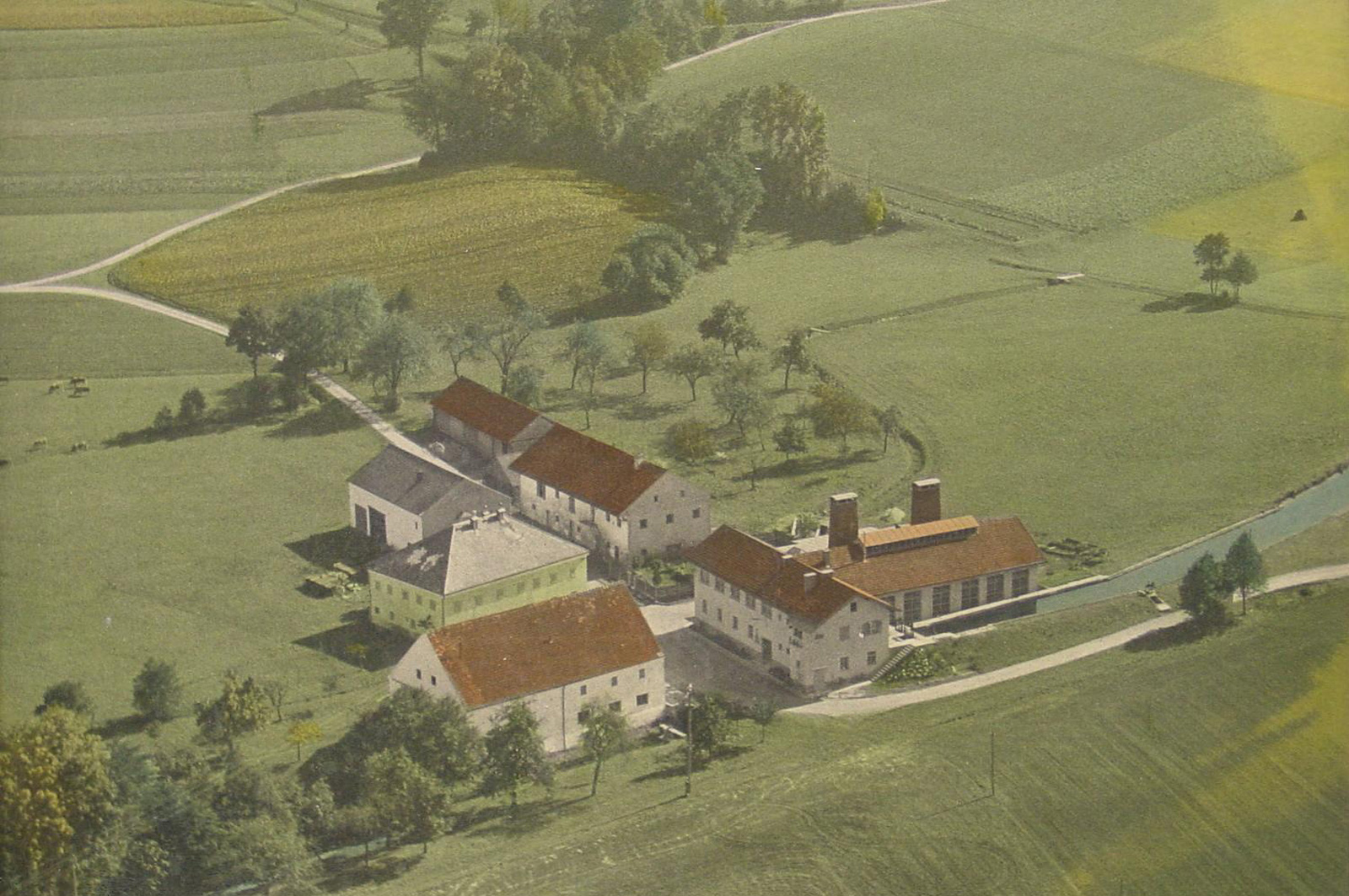
From hammer forging to drop forging
After returning from Russian captivity, Ferdinand Bernhofer IV takes over management and begins restructuring the hammer mill: with the forging building inaugurated in January 1949, in which spring and air hammers as well as spindle presses are installed, the decisive step towards drop forging is taken.
Photo: Aerial view of the Bernhofer smithy and farm, around 1957.
-
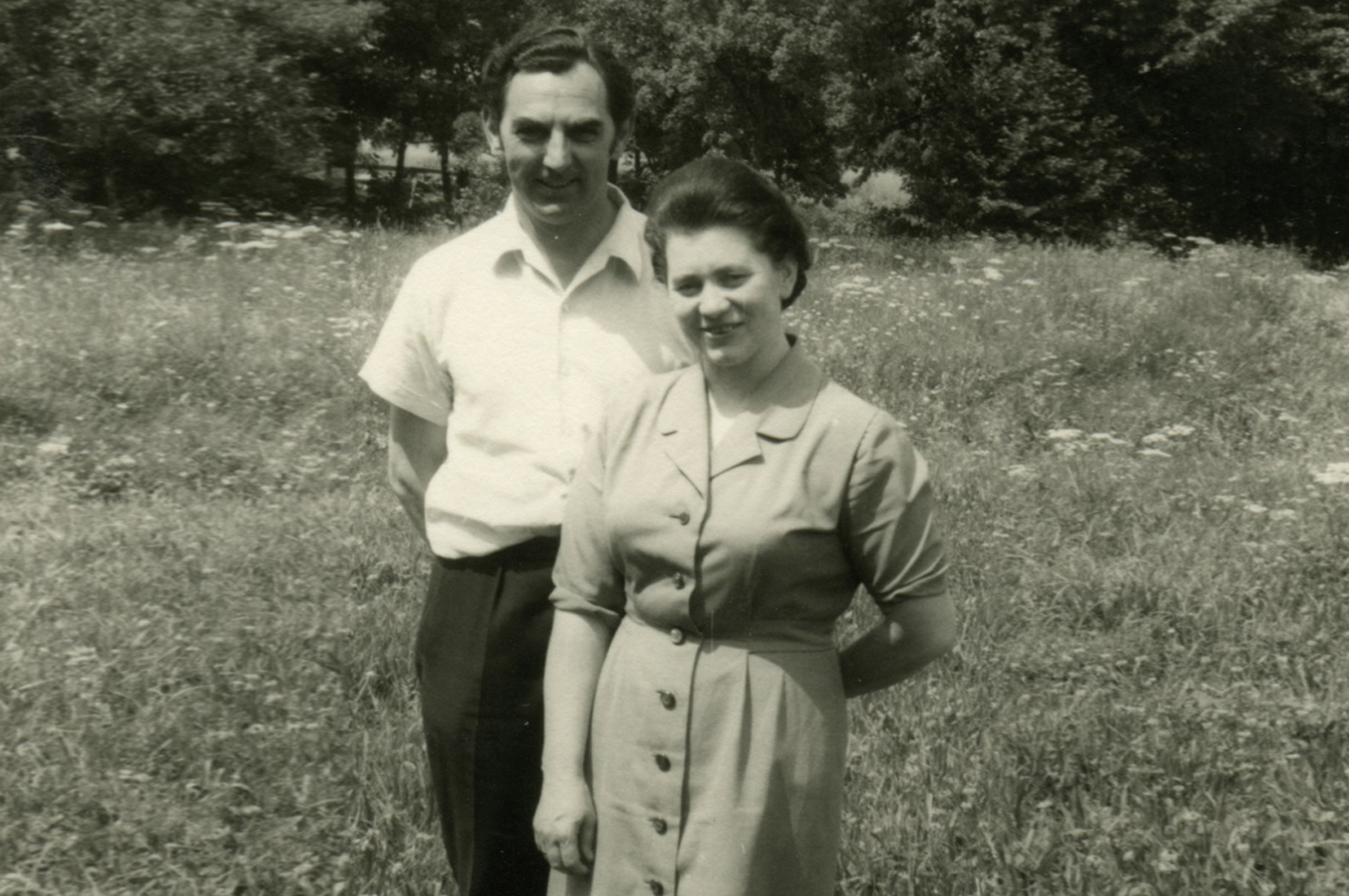
Strong personalities
When Ferdinand Bernhofer IV passed away in 1975, his wife Berta Bernhofer took over as the new owner of the company and was able to count on the active support of her leading employee Gerald Gattringer.
Photo: Berta and Ferdinand Bernhofer.
-
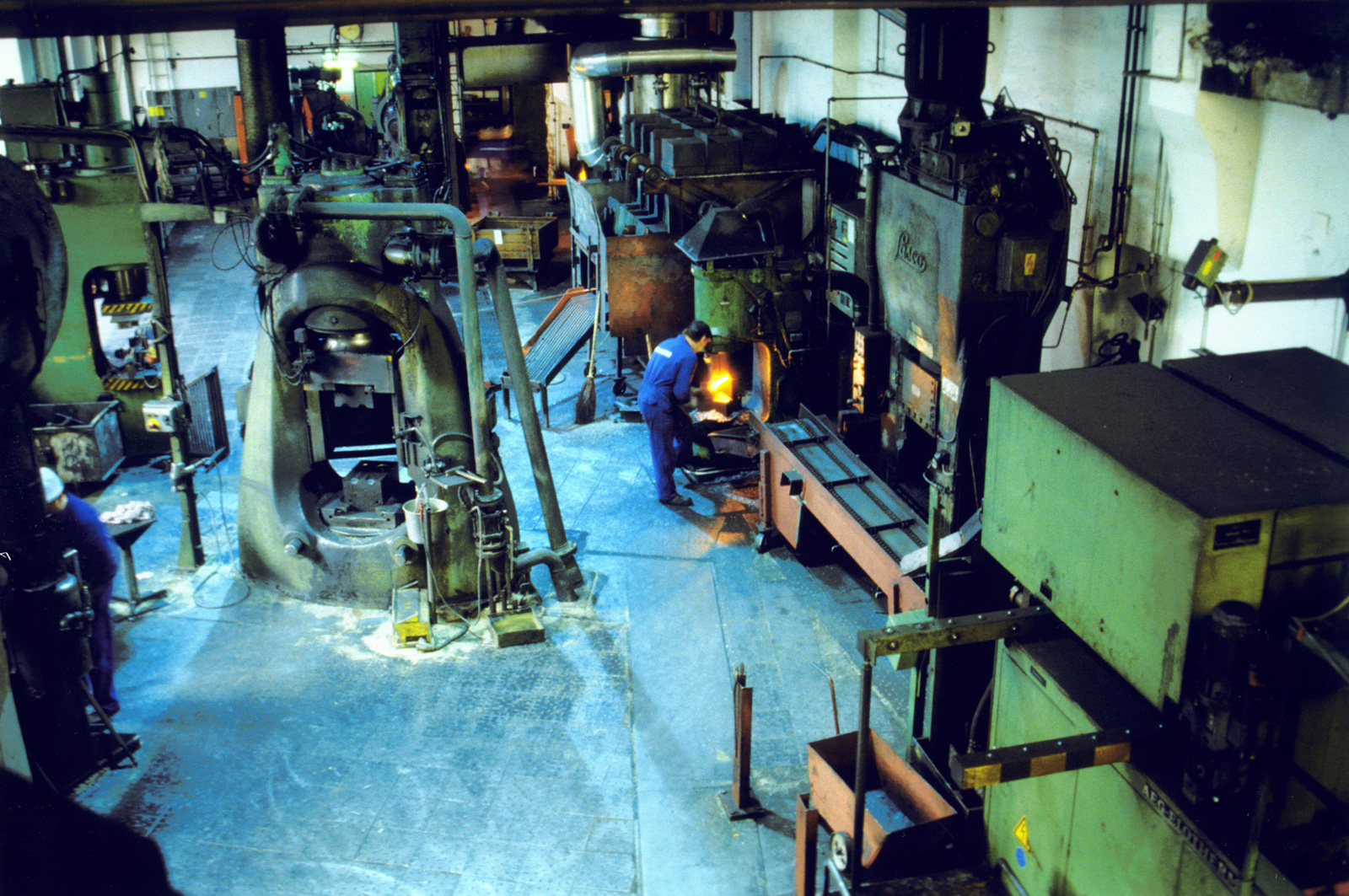
Modernization and internationalization
In 1987, Ferdinand Bernhofer V took over the drop forge as business owner. Under his leadership, sales markets were internationalized, new technologies were established, and the value chain was expanded.
The construction of a press hall and the installation of the first press group in 1990/91 marked a decisive step towards modern forging technology.
Between 1992 and 1995, Bernhofer focused its investments on heat treatment in the forging sector, as well as on design, toolmaking, and post-processing methods.
Photo: View of the forge hall with employees working on various forging machines, 1980s.
-
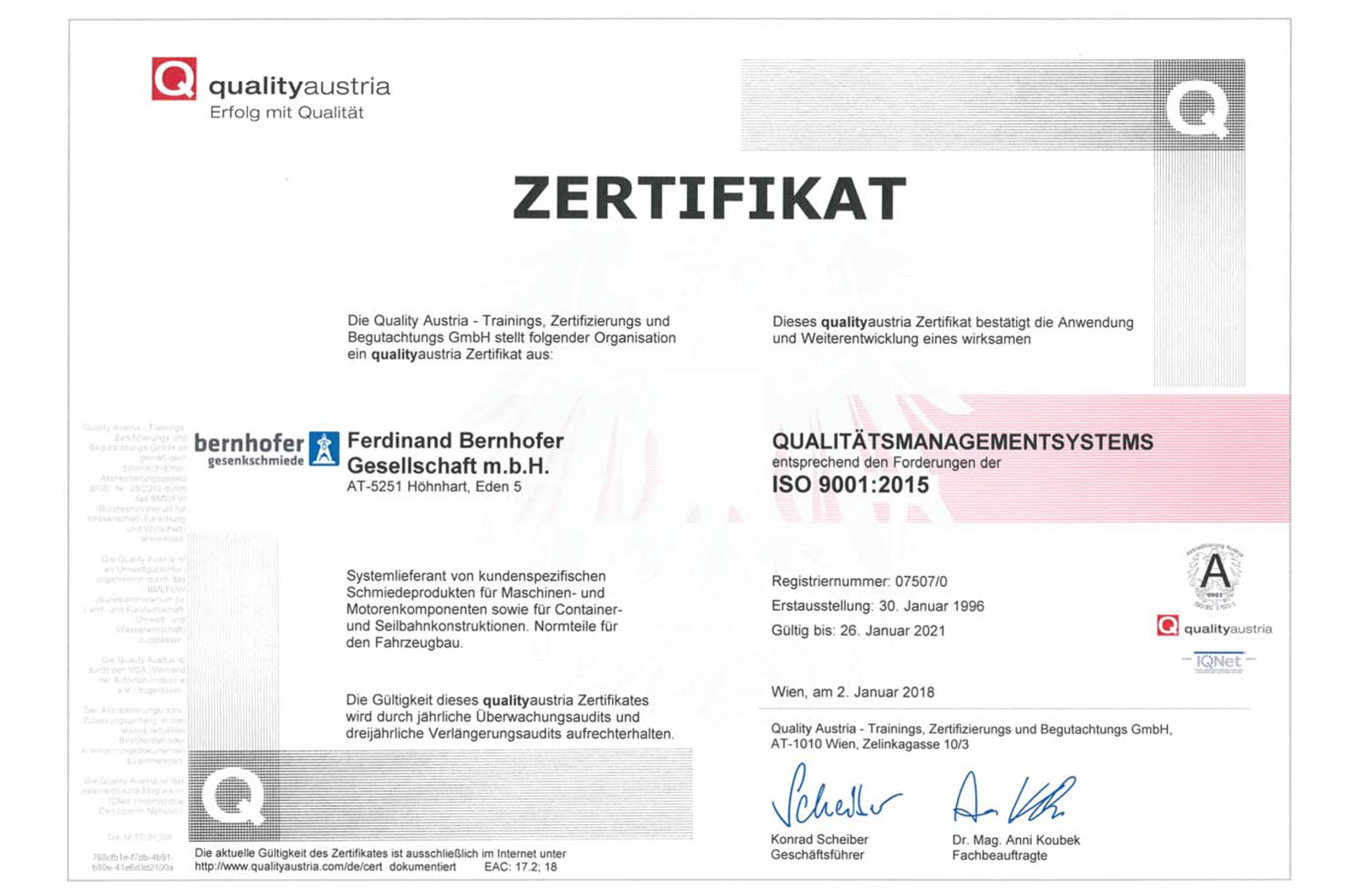
Certified quality
In 1996, Bernhofer received certification in accordance with the ISO 9001 quality management standard and the ISO 14001 environmental management standard.
Photo: ISO 9001:2015 certificate.
-
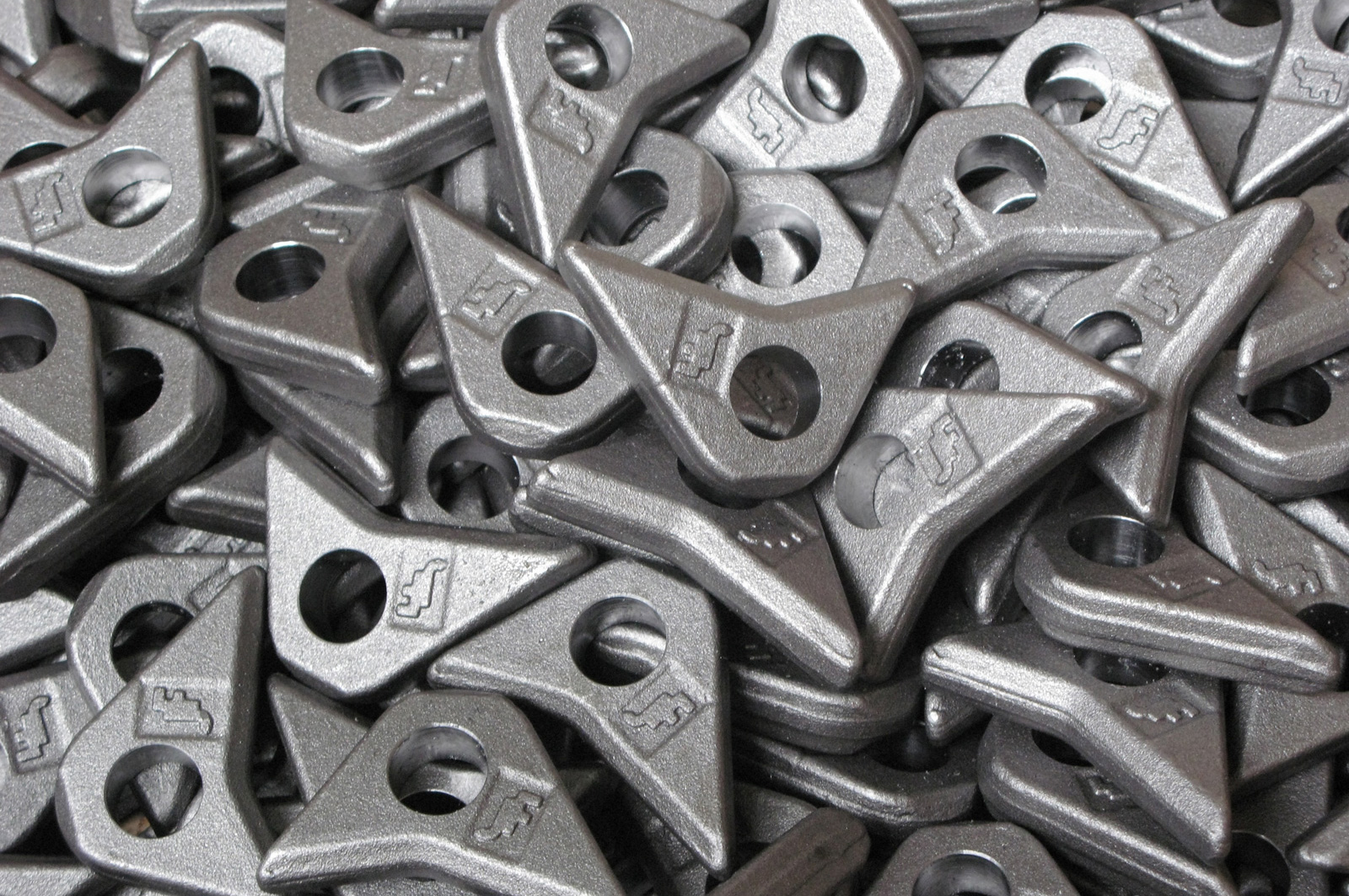
Reliable forging
A second group of presses is installed in the press hall, which was newly constructed in 2000. From 2001 onwards, the new PVM hall is adorned with the Bernhofer logo "Perfection in its purest form," a visible synonym for reliable forging work.
In 2002, a die and material storage hall was added to the company premises in Höhnhart, followed by another press hall in 2005.
Photo: Forged parts by Bernhofer, 2008.
-
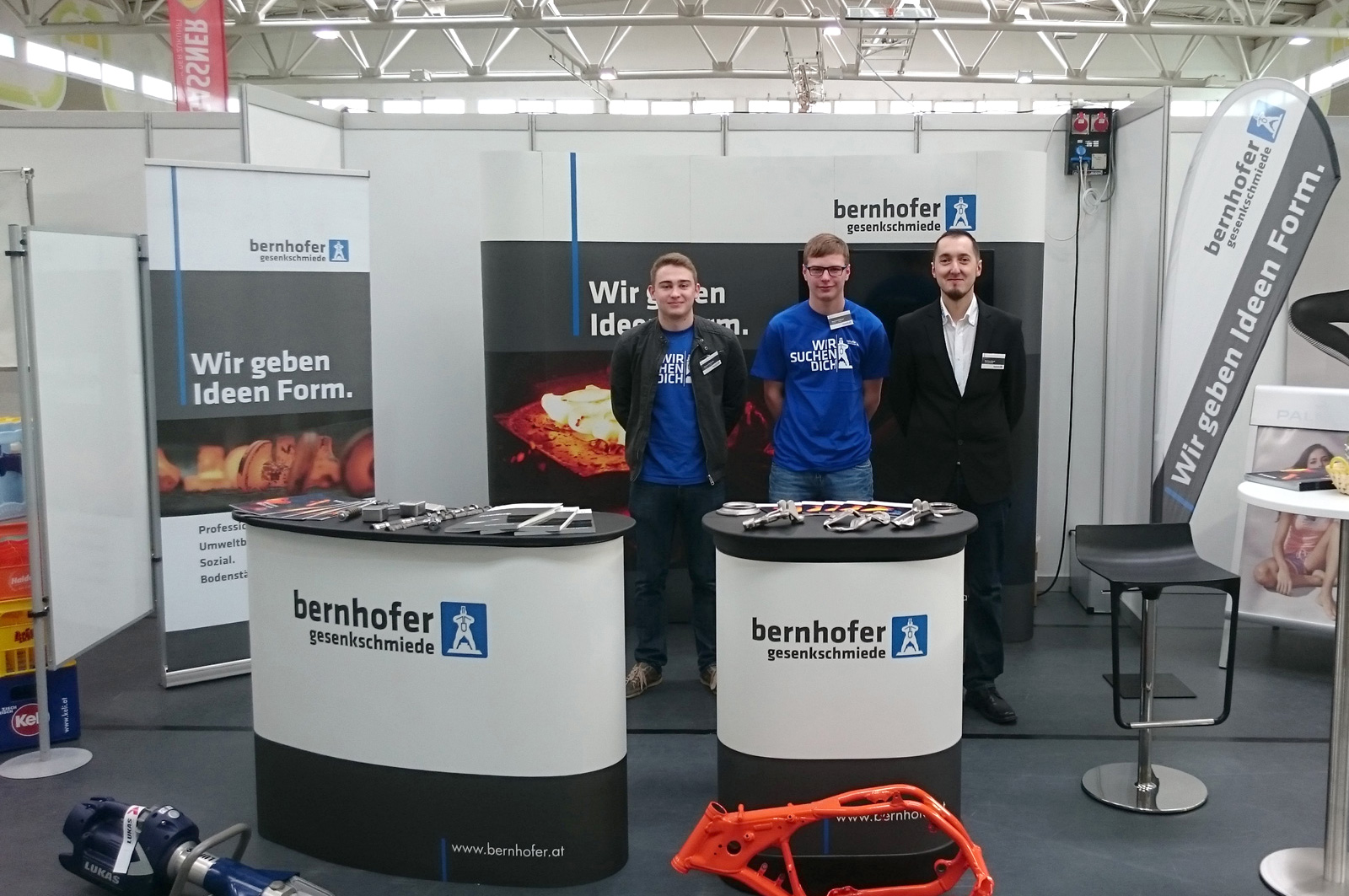
The skilled workers of tomorrow
The Bernhofer drop forge is honored as a "Top Training Company" in 2010.
Photo: Bernhofer at the Braunau Apprentice Fair, 2017.
-
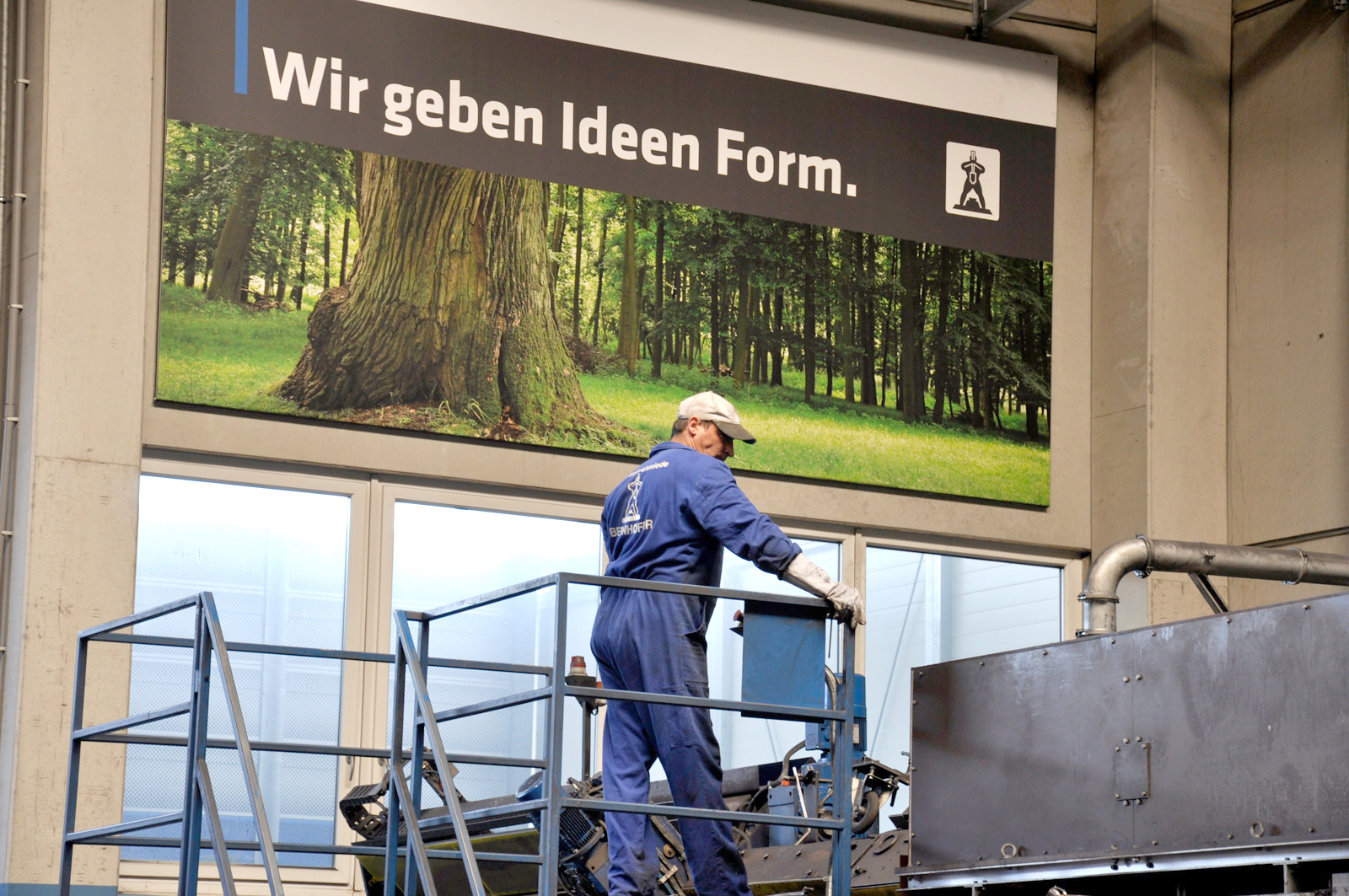
We give shape to ideas
The long-established company has developed its own unique corporate mission statement based on this slogan.
A new corporate mission statement will be developed in 2011.
-
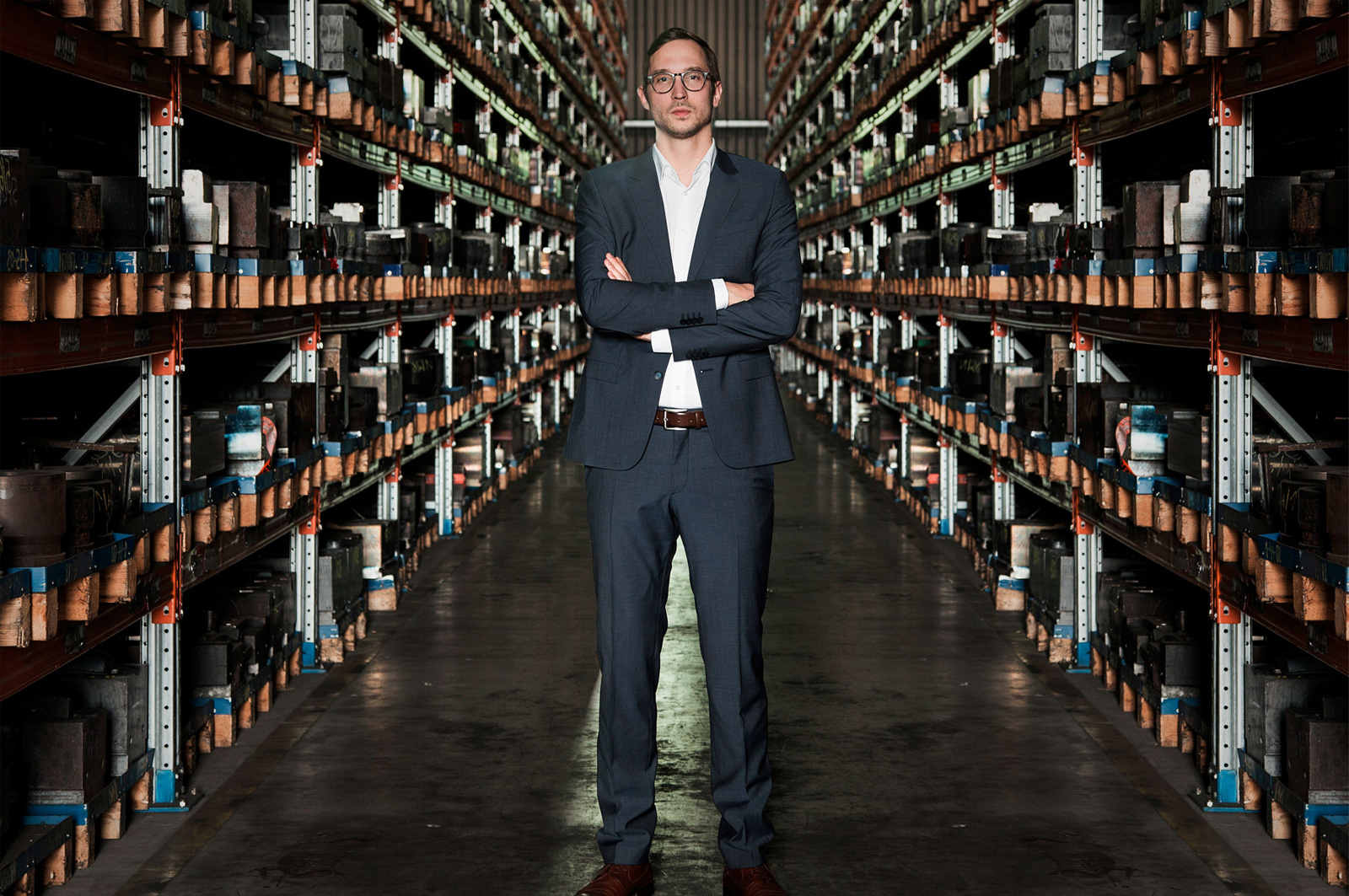
Highlights of a new generation of leaders
In March 2015, Ferdinand Bernhofer VI joined the family business and, as technical managing director, has been responsible for production, quality management, and research and development since September 2016.
In the three years leading up to 2017, in addition to new acquisitions in the forging sector, comprehensive investments will be made in the processing of forged parts and thus in the deepening of the value chain.
Photo: Ferdinand Bernhofer Jr., 2015.
-
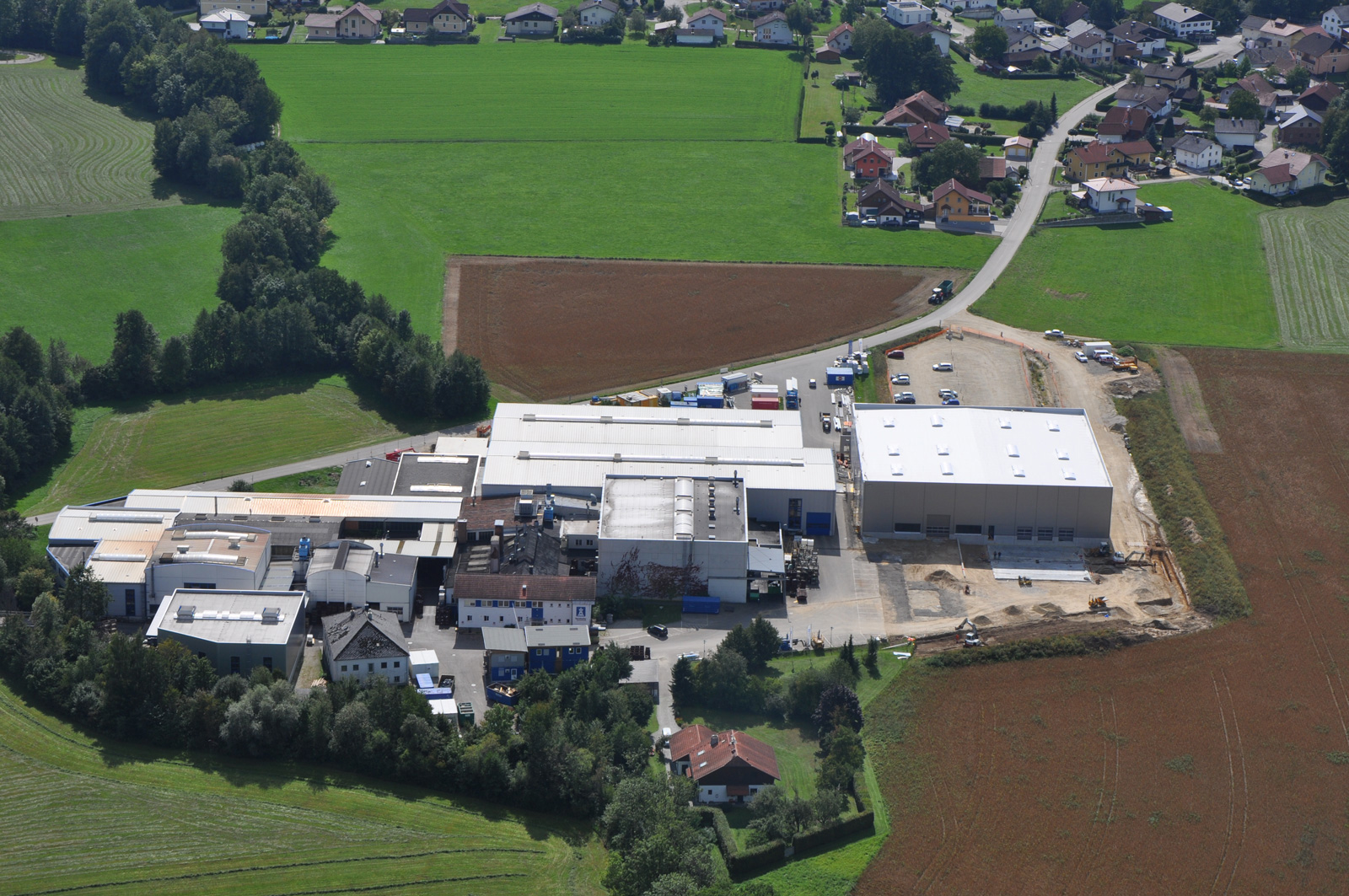
Benchmark: "Bernhofer 2020"
Starting in 2019, the largest investment project in the company's history to date will begin under the title "Bernhofer 2020": With the construction of a new logistics center and the modernization of its operating equipment, Bernhofer is setting new standards in terms of resource conservation and optimization of production flow, creating a sustainable and strong basis for future challenges.
Photo: Expansion of operations as part of the "Bernhofer 2020" project, taken in 2019.
"In addition to economic efficiency, every investment focuses on sustainability and energy efficiency. For example, we utilize the waste heat from our induction furnaces and our heat treatment plant, use only electricity as an energy source in our manufacturing process, and have been relying on 100% green electricity since 2017."
CEO Ferdinand Bernhofer
So how can steel be processed in a way that also contributes to climate protection?
Through the consistent conversion from fossil fuels such as gas to electricity from renewable energies throughout the entire process chain.
Bernhofer invests in renewable energies and uses solar energy from its own PV system. Since January 1, 2017, the company has been using 100% green electricity, mainly from hydropower. In addition, energy-efficient production and the use of waste heat from the forging process (induction furnaces, quenching tanks) via heat pumps for heating and cooling purposes contribute to the conservation of resources.
The continuous expansion of the internal range of services (heat treatment, machining, assembly) increases the added value at the site and sustainably reduces emissions through reduced transport.
"We see digitalization as part of our sustainability strategy. In addition to the potential for process improvements and energy savings, we see it as part of the solution to the increasingly difficult labor market and use automation and digitalization to offer our employees more flexible working hours and locations—both in administration and in production," says CEO Ferdinand Bernhofer.